
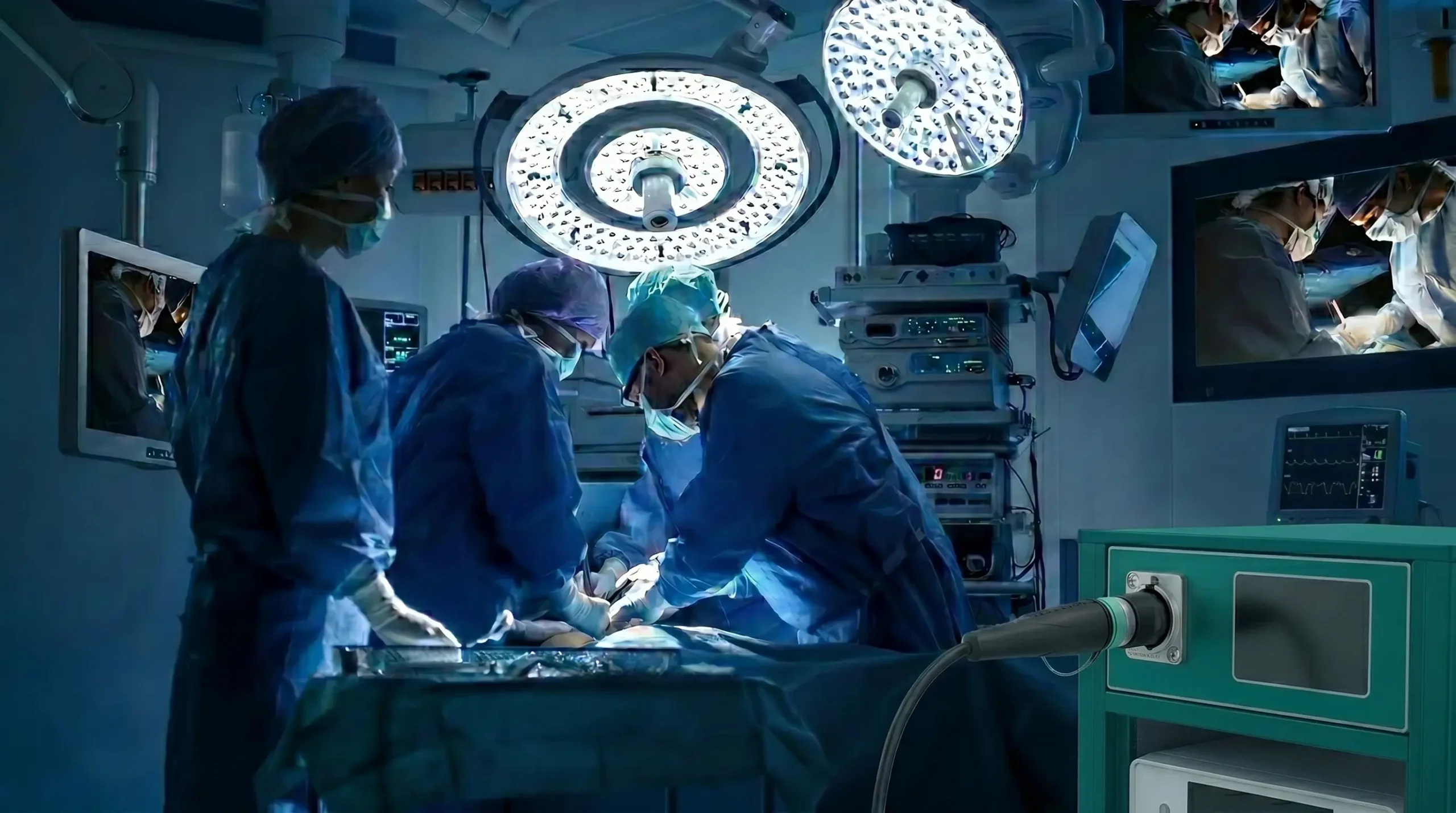
The Hidden Cost of Building an OR for Today Instead of Tomorrow
Healthcare organizations are being asked to support more advanced imaging, more connected devices, more data, and more complex clinical workflows within facilities that may remain in service for decades. Hospitals often design operating rooms around the equipment list approved for a current project. That approach may satisfy the immediate budget, but it can create substantial long-term costs when imaging, networking, displays, documentation systems, and clinical workflows change. A future-ready OR is not defined by predicting every device. It is defined by providing adaptable pathways, scalable connectivity, accessible infrastructure, and multidisciplinary governance that allow the room to evolve without repeated reconstruction. The strategic objective is not to predict every future technology. It is to create an environment that can adapt when those technologies arrive.
The Lowest Initial Cost Can Become the Highest Lifecycle Cost
A project can appear financially disciplined because it minimizes conduit, fiber, rack space, power capacity, or service access. Those savings are often small compared with the cost of opening walls, interrupting procedures, relocating equipment, and coordinating infection-control measures after the room is active. Capital committees should therefore evaluate total lifecycle cost, not only construction cost. The room that is least expensive on opening day may become the most expensive room to modernize five years later.
This requires project teams to examine the complete lifecycle of the environment: design, construction, commissioning, clinical use, maintenance, replacement, and eventual modernization. Decisions that appear technical or minor during construction can influence reliability, workflow, and cost for many years.
Medical Technology Changes Faster Than Buildings
Operating rooms may remain in service for twenty years or more, while displays, imaging processors, network requirements, and documentation platforms may change several times during that period. Designing the room around fixed equipment assumptions creates a structural mismatch. The building is permanent, but the technology is temporary. Future-ready planning accepts that mismatch and intentionally separates long-lived infrastructure from shorter-lived devices.
This requires project teams to examine the complete lifecycle of the environment: design, construction, commissioning, clinical use, maintenance, replacement, and eventual modernization. Decisions that appear technical or minor during construction can influence reliability, workflow, and cost for many years.
Flexibility Must Be Designed In
Useful flexibility includes spare conduit, additional fiber, accessible cable routes, serviceable connection points, adaptable rack capacity, and power distribution that can accommodate reasonable expansion. It also means documenting pathways and labeling connections so future teams can understand the original design. Flexibility is not empty space without a purpose. It is planned capacity that reduces the complexity of future change.
This requires project teams to examine the complete lifecycle of the environment: design, construction, commissioning, clinical use, maintenance, replacement, and eventual modernization. Decisions that appear technical or minor during construction can influence reliability, workflow, and cost for many years.
Connectivity Is Part of the Clinical Foundation
Video, data, fiber, USB, and power connections are often treated as minor components within a much larger project. In practice, they determine whether devices communicate reliably and whether systems can be serviced efficiently. Neutrik Medical solutions such as opticalCON HYBRID MED, etherCON®, locking HDMI, MediaCON USB-C, and powerCON TRUE1® support secure, durable, and scalable connectivity in demanding clinical environments.
This requires project teams to examine the complete lifecycle of the environment: design, construction, commissioning, clinical use, maintenance, replacement, and eventual modernization. Decisions that appear technical or minor during construction can influence reliability, workflow, and cost for many years.
Think Beyond the Opening-Day Equipment List
The most useful planning question is not whether the room supports the equipment being installed today. It is whether the room can support the next imaging platform, the next display architecture, the next networking requirement, and the next clinical team without major reconstruction. This perspective transforms infrastructure from a construction line item into a strategic asset.
This requires project teams to examine the complete lifecycle of the environment: design, construction, commissioning, clinical use, maintenance, replacement, and eventual modernization. Decisions that appear technical or minor during construction can influence reliability, workflow, and cost for many years.
Industry Insight
Hospitals that perform technology-roadmap reviews before schematic design are better able to align construction decisions with future equipment replacement cycles.
Questions Every Healthcare Organization Should Ask
- What technologies are likely to be replaced during the room’s expected life?
- Where can additional fiber, power, and conduit be added economically now?
- Can service teams access critical pathways without disrupting procedures?
- Have IT, Clinical Engineering, Facilities, and Surgical Services reviewed the same plan?
Future-Proofing Tip
Treat infrastructure capacity, access, labeling, and connection standards as planned clinical resources. Protect them through documented governance so short-term changes do not consume the flexibility reserved for future technology.
Key Takeaways
- Infrastructure decisions should be evaluated across the full lifecycle of the clinical space.
- Scalable capacity and serviceable pathways reduce the cost and disruption of future upgrades.
- Clinical Engineering, IT, Facilities, and clinical leaders should collaborate before design decisions become difficult to change.
- Reliable connectivity is a foundational requirement for advanced imaging, data, video, and connected medical technology.
- Future-ready planning protects capital investment and supports long-term operational resilience.
Frequently Asked Questions
What does future-proofing an OR mean?
It means creating adaptable infrastructure that can support changing technologies and workflows without requiring major reconstruction.
Does future-proofing require predicting every new device?
No. It requires scalable capacity, accessible pathways, and design standards that make unknown future upgrades easier to accommodate.
How does Neutrik Medical contribute?
Neutrik Medical provides robust connectivity solutions for power, fiber, video, and data that support reliable and serviceable clinical infrastructure.
About Neutrik Medical
Neutrik Medical develops advanced connectivity solutions for demanding healthcare environments. Its portfolio supports reliable transmission of power, fiber, video, USB, and network data across operating rooms, Hybrid ORs, Interventional Radiology suites, endoscopy departments, imaging facilities, and other connected clinical spaces. Product selection and application should always be reviewed for the requirements of the specific system and environment.
About the Author
Quantum Edge Group is a healthcare technology consulting and strategic development firm specializing in healthcare infrastructure, OEM strategy, enterprise connectivity, digital transformation, AI-enabled solutions, healthcare marketing, and business development. This article was researched, written, and developed by Quantum Edge Group on behalf of Neutrik Medical.
Written by Quantum Edge Group | Prepared for Neutrik Medical | Part 1 of 20