
Medical Connectivity Resources
Explore resources, product information, white papers, case studies, and
technical content for NEUTRIK medical connectivity solutions.
- Blog
- July 29, 2026
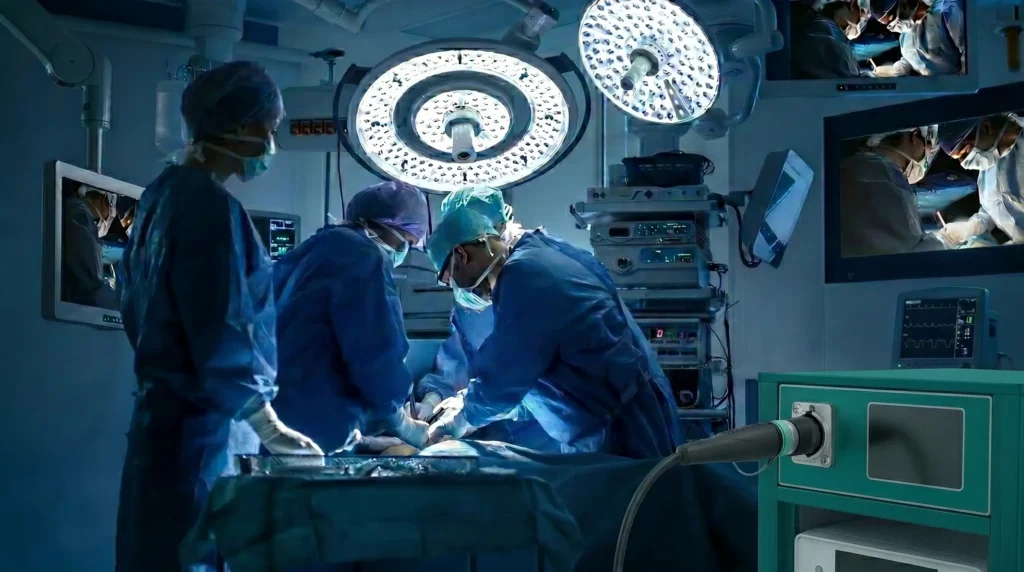
FUTURE-PROOFING HEALTHCARE INFRASTRUCTURE
Healthcare technology changes at a pace that buildings were never originally designed to match. An operating room, Hybrid OR, Interventional Radiology suite, endoscopy department, or ambulatory surgery center may remain active for decades while the devices, displays, imaging platforms, networks, and software within it change repeatedly. The decisions made during planning and construction therefore have consequences far beyond opening day.
- Blog
- July 10, 2026
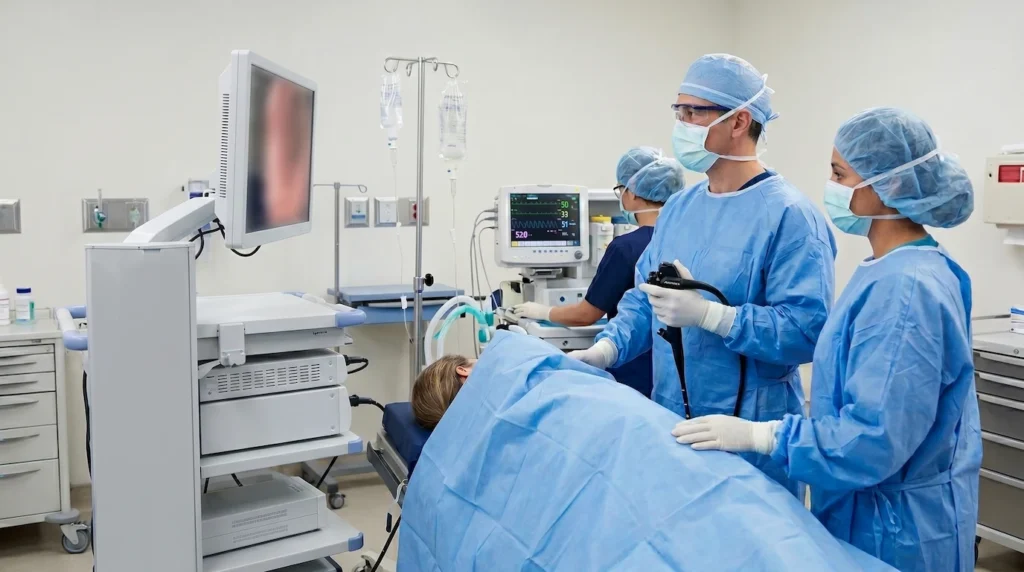
Expanded Beam vs. Physical Contact Connectors: What Medical Device Engineers Should Know
Every medical device that uses fiber optic connectivity requires a decision most engineers make once and rarely revisit: physical contact or expanded beam?
In many industries, this is not a particularly consequential choice. Data centers, structured cabling, and broadcast infrastructure operate in controlled environments where physical contact connectors perform predictably, get inspected regularly, and are handled by trained technicians following documented protocols.
Medical devices operate in a different world entirely. The connector in a surgical visualization system, an endoscopy tower, or an intraoperative imaging platform gets mated and unmated by clinical staff in gloves, cleaned repeatedly with hospital-grade disinfectants, and operated in environments where no one has time for a 200x magnification scope and a three-step cleaning protocol between procedures.
That difference changes which connector technology is the right choice. This article walks through both options in the detail that a medical device engineer actually needs: the physics, the performance tradeoffs, the real-world failure modes, and the design decision framework.
- Blog
- July 10, 2026
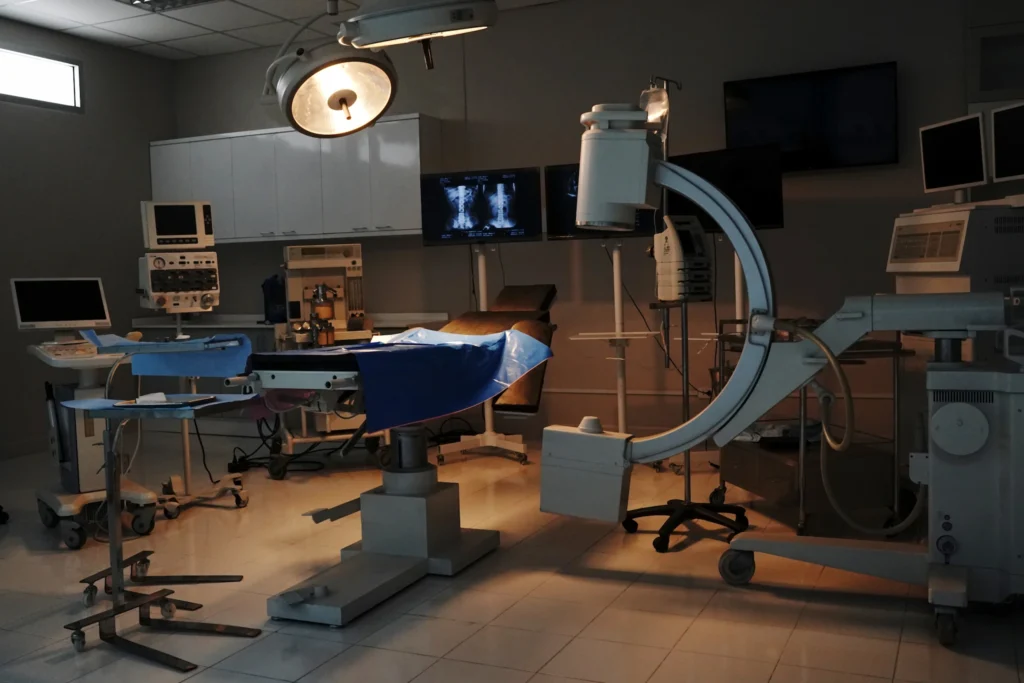
10,000 Mating Cycles: What Long Connector Life Means for Hospitals and OEMs
There’s a number on most connector spec sheets that rarely gets discussed during procurement.
Mating cycle rating.
It’s tucked in between insertion loss and operating temperature – a single number that, in practice, tells you how long the connector will actually perform before it becomes a liability. And in most medical connectivity specifications, that number is far lower than it needs to be.
Typical fiber optic connectors are rated for 500 to 1,000 mating cycles. For a busy endoscopy suite or a high-volume imaging department, that’s not a five-year component. That’s a problem waiting to announce itself at an inconvenient time.
The opticalCON® HYBRID MED is rated to 10,000 mating cycles – with validation data demonstrating no significant variation in optical performance across that full rated life. That’s not a marketing claim. It’s a documented test result. And understanding what it means operationally is the point of this article.

- Blog
- June 28, 2026
How Lensed Fiber Technology Helps Reduce Maintenance in Medical Environments
PRIZM® MT lensed fiber technology helps reduce connector contamination, simplify medical fiber maintenance, and improve long-term reliability in surgical imaging and OEM medical device applications.
- Blog
- June 28, 2026
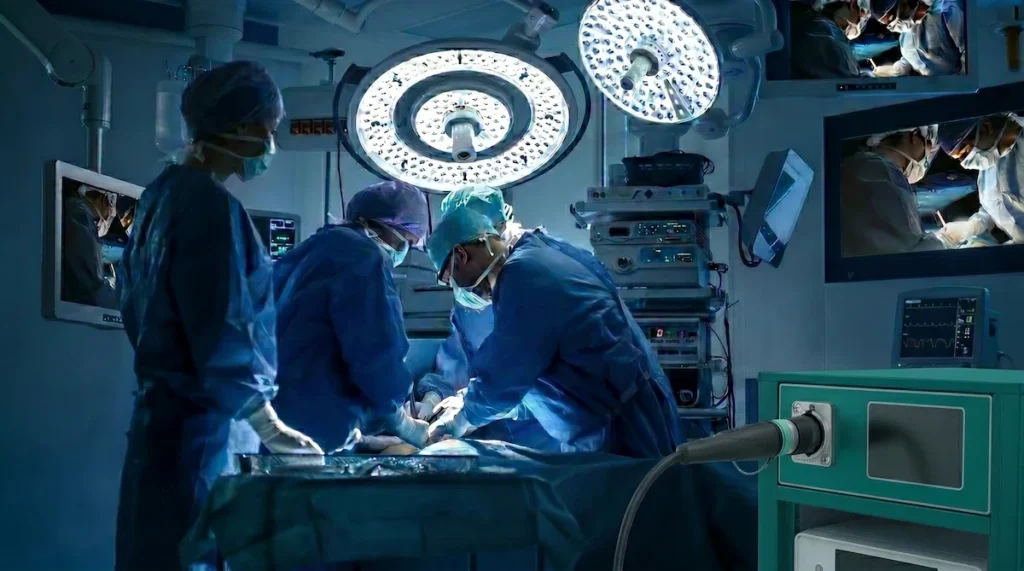
Why Operating Rooms Need Smarter Connectivity, Not More Cables
Smarter operating room connectivity for safer, cleaner, high-performance surgical environments.
- White Paper
- June 27, 2026
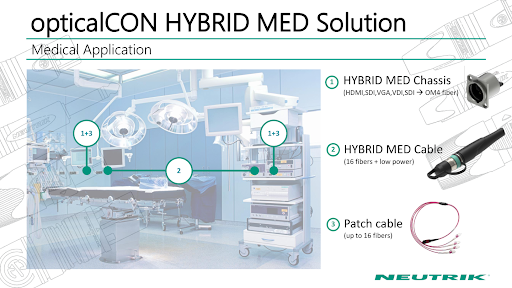
opticalCON® HYBRID MED
Technical Architecture, Performance Envelope, and OEM Integration Considerations